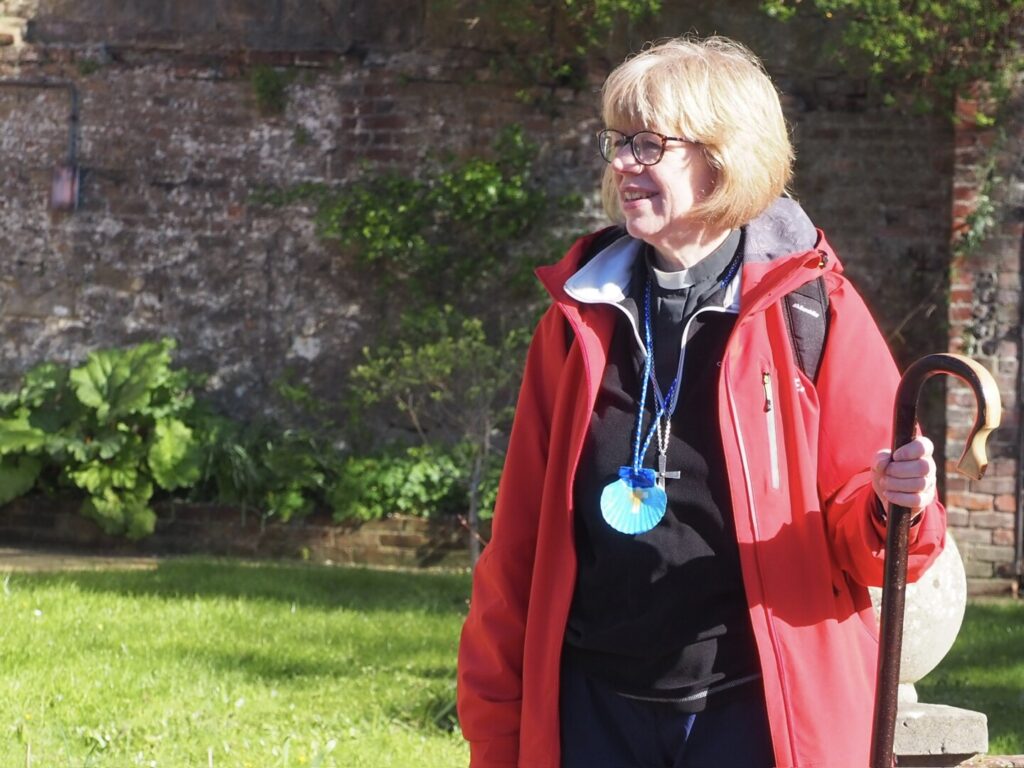
The new Archbishop of Canterbury, the Most Revd and Rt Hon Dame Sarah Mullally, set out last week on a six-day walking pilgrimage from London to Canterbury, as part of her spiritual preparation for her Installation service at Canterbury Cathedral on Wednesday 25 March.
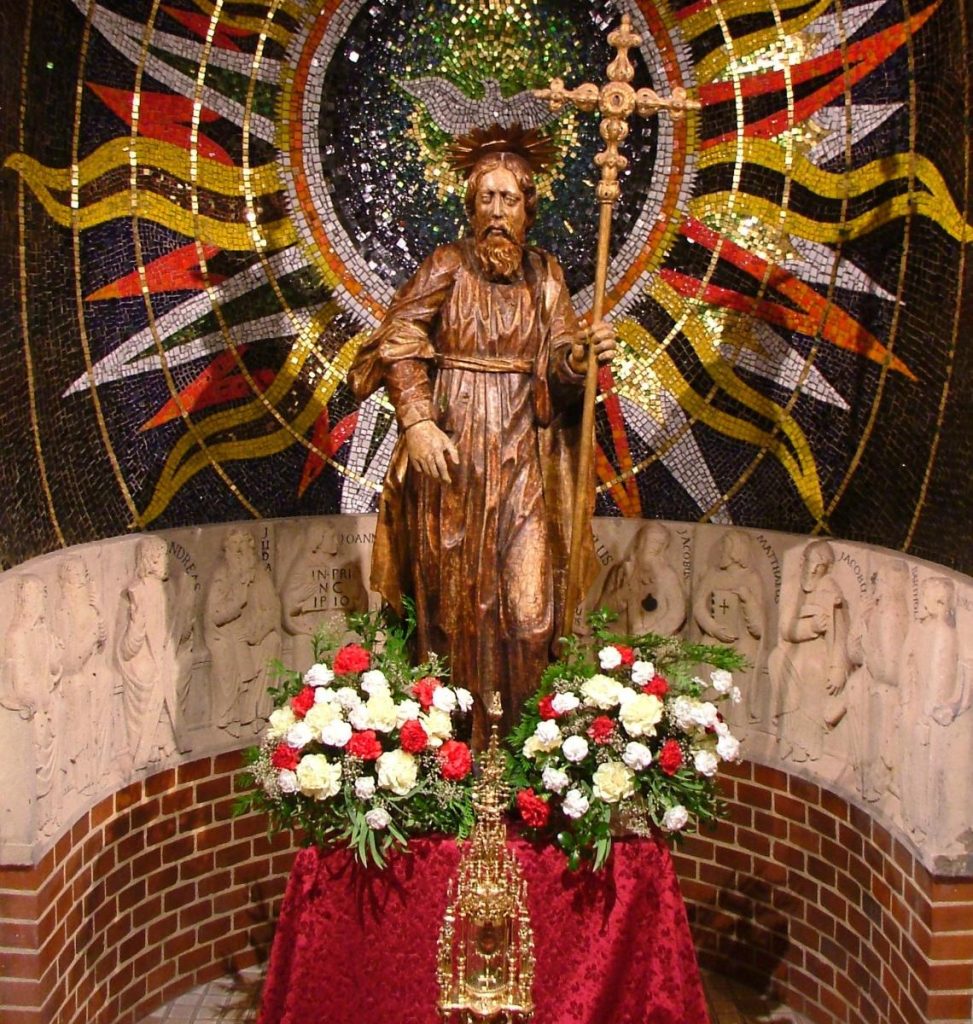
The British Province of Carmelites were proud that during this personal pilgrimage, the Archbishop was able to visit two Carmelite shrines – Aylesford Priory on Friday and the Shrine of Saint Jude in Faversham on Saturday.
The Archbishop arrived at Aylesford Priory on the morning of Friday 20 March. Together with her husband, Mr. Eamonn Mullally, they were welcomed by the Prior of Aylesford, Fr. Michael Cox, O.Carm and Carmelite friar and Director of Vocations, Fr. Gerard Walsh, O.Carm.
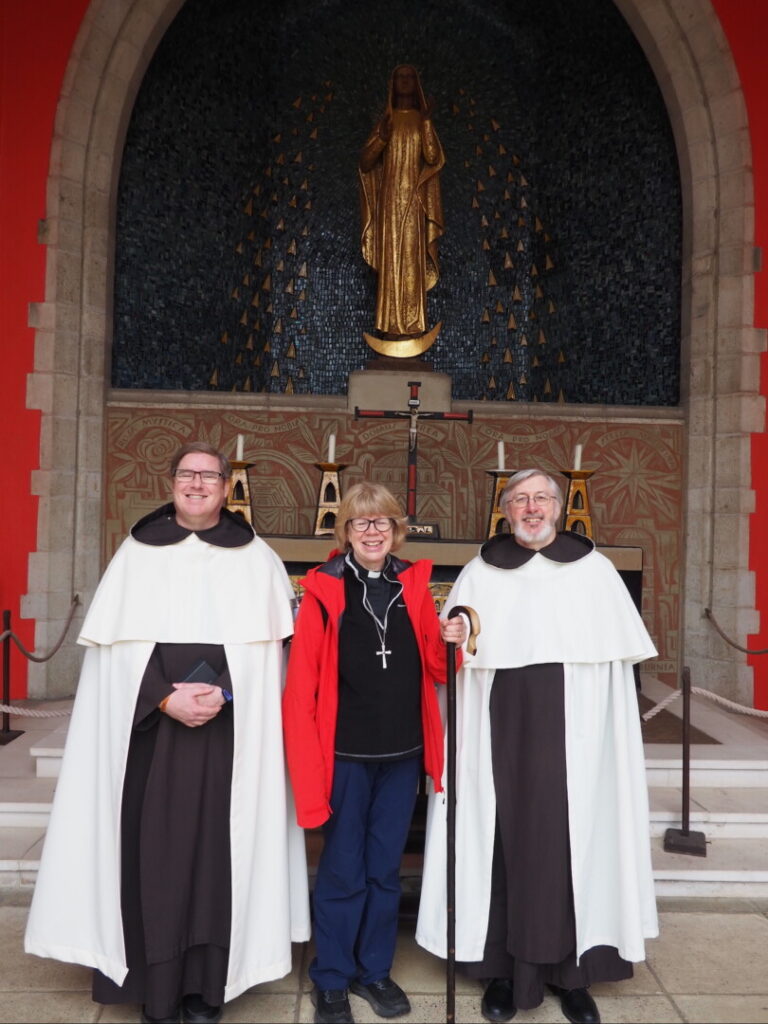
The two friars led the Archbishop and party on a tour of the Priory (also know as ‘The Friars’) and stopped at each of the chapels for prayer. They were able to introduce the history of the shrine, its position on the pilgrimage route, and why it remains such a special place for the Order of Carmelites.
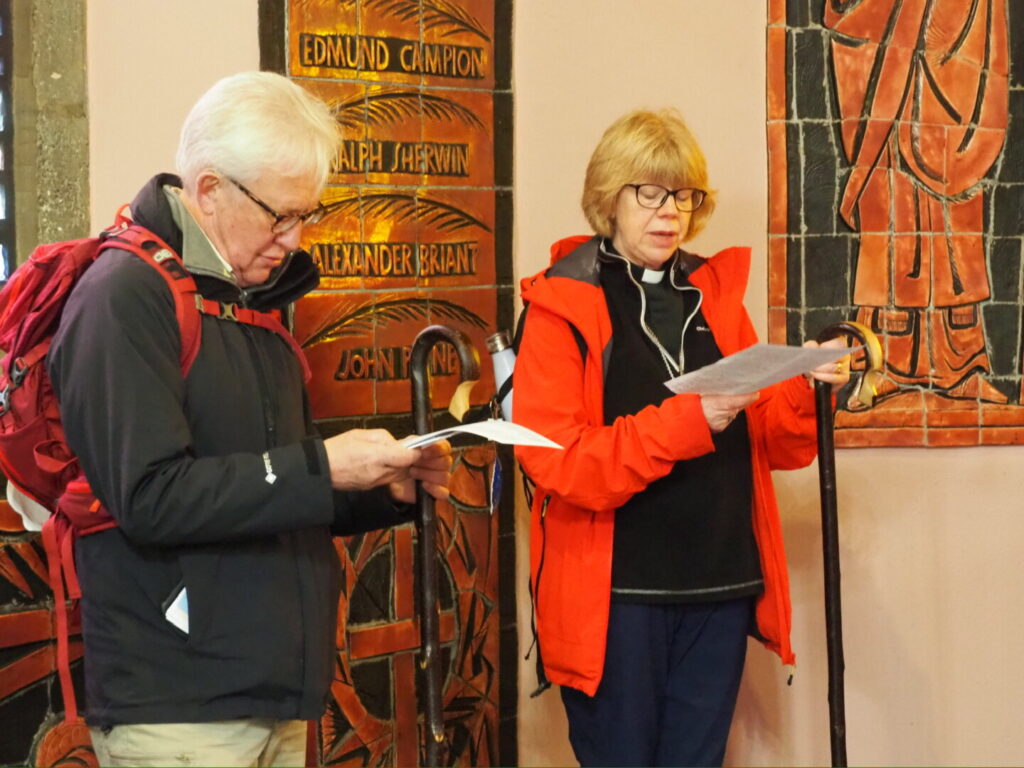
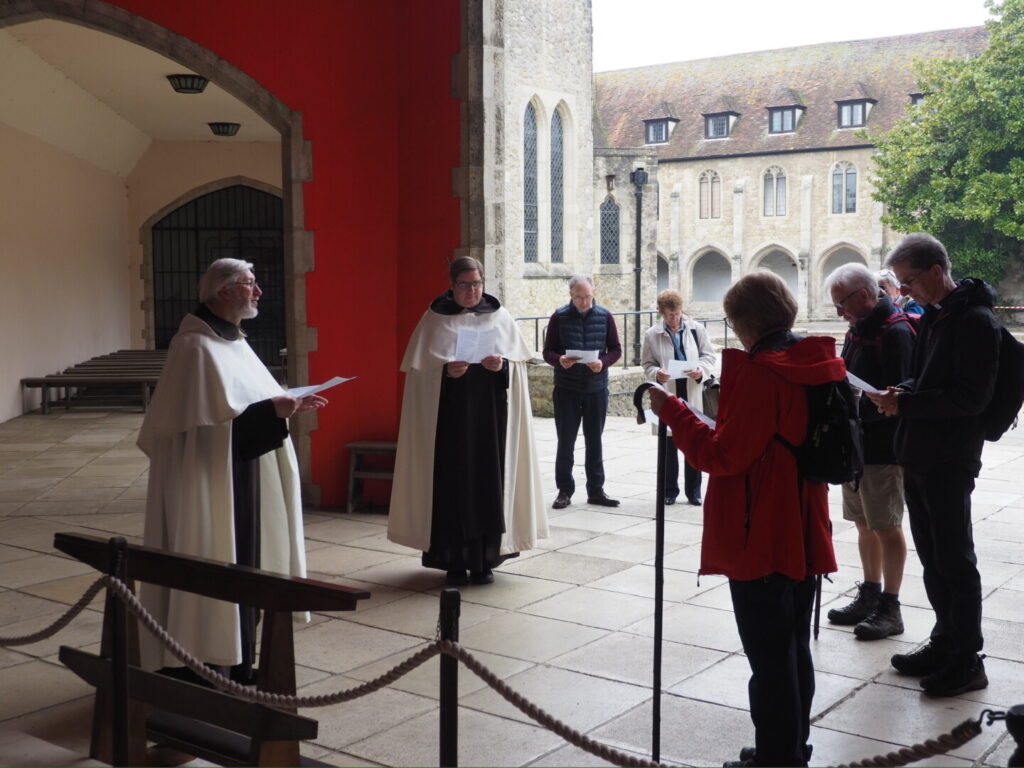
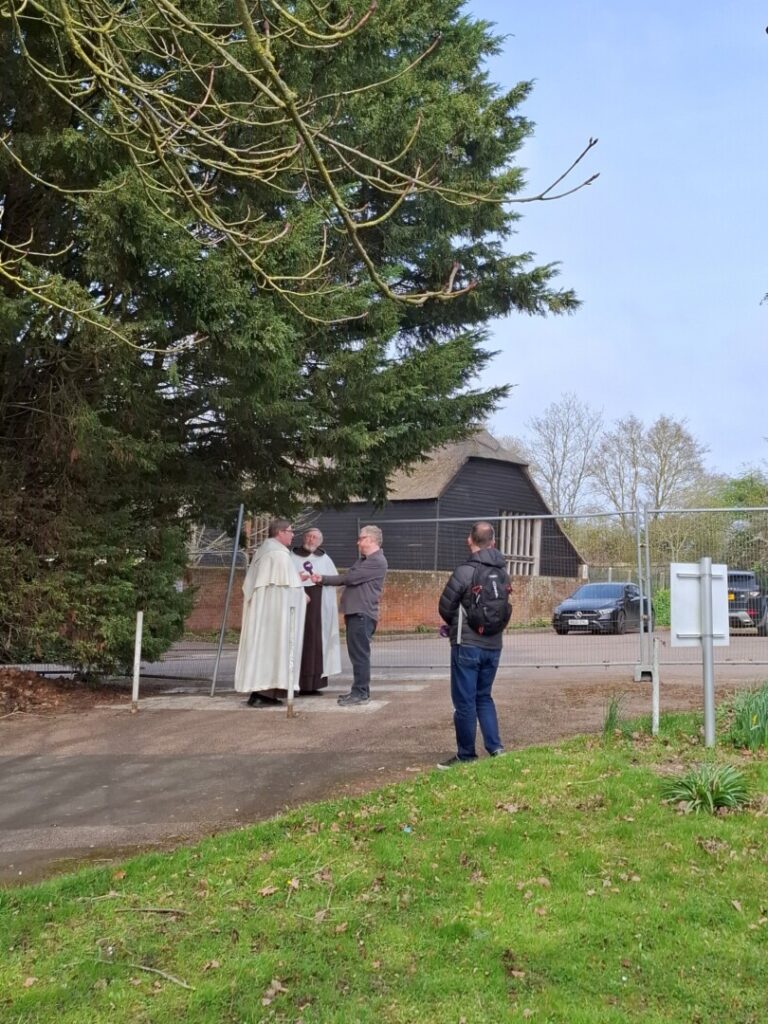
Afterwards, Fr. Michael and Fr. Gerard were interviewed by BBC Kent.
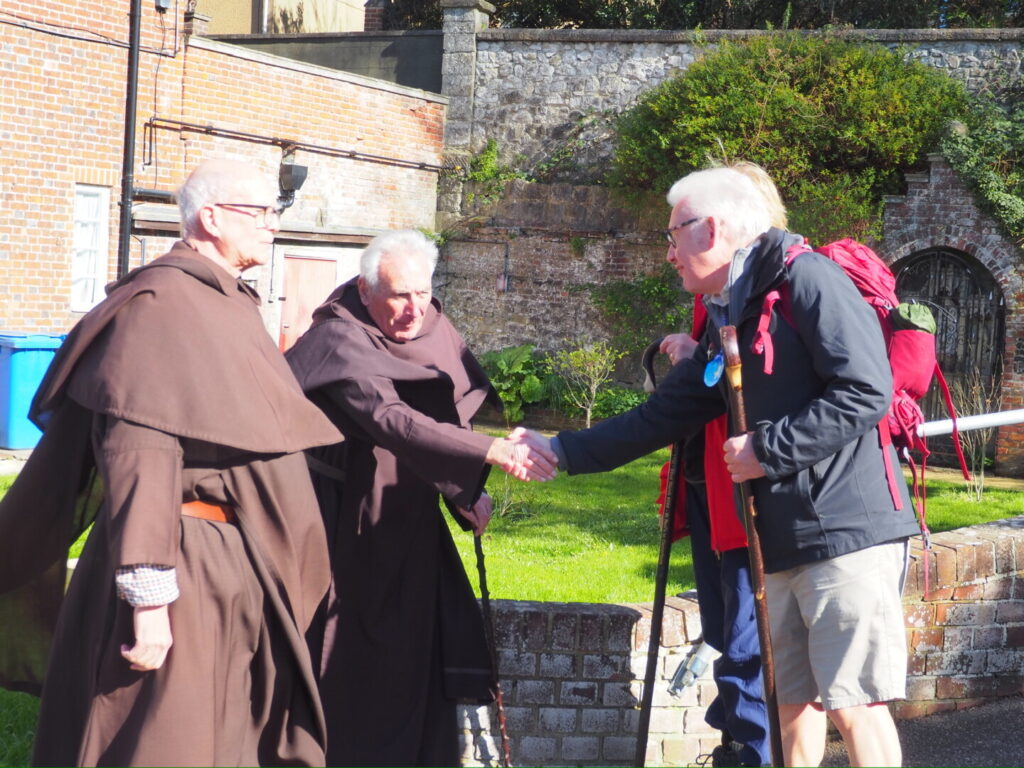
The next day (on Saturday 21 March) – and after walking through the most beautiful countryside that Kent can offer – Archbishop Mullally met family and children from the primary schools in Ospringe near Faversham before coming to the Shrine of Saint Jude. Once again, the Archbishop and her husband were greeted by Carmelite friars: this time – Shrine Chaplain, Br. Paul de Groot, O.Carm and Fr. Patrick O’Keeffe, O.Carm.
The Archbishop’s party were then led on a tour by Mr. Matthew Betts and Br. Paul which included the ‘Footprints of Hope’, the ‘Garden of Hope’ and the shrine itself. They were able to talk about Saint Jude as the Apostle of Hope.
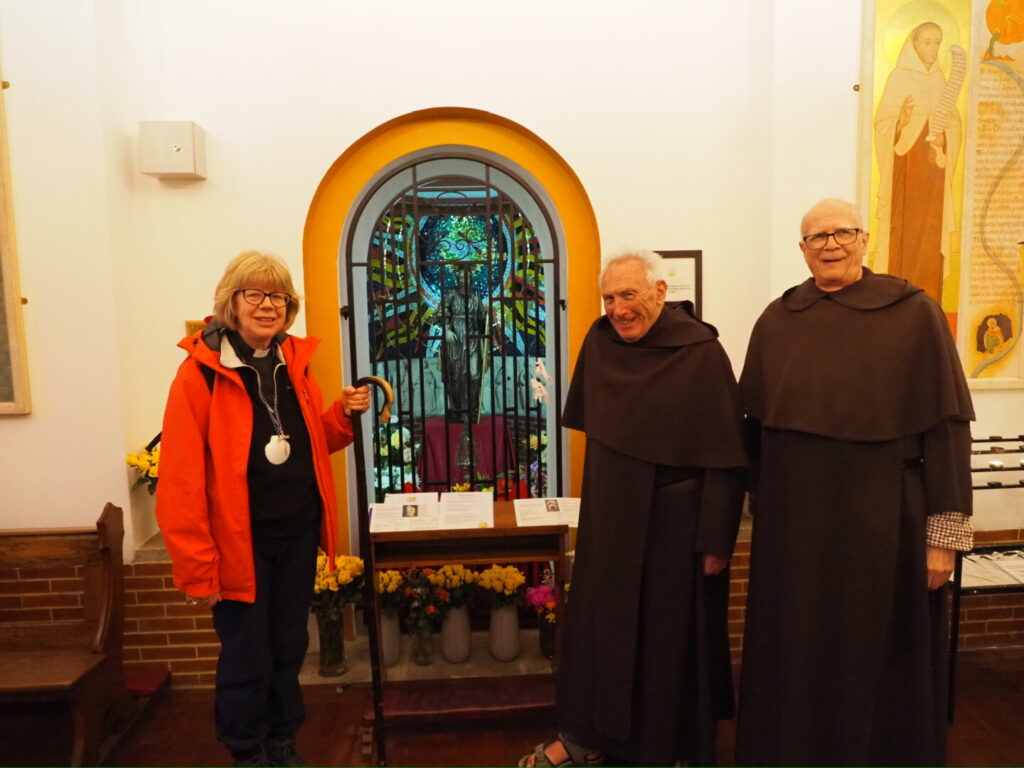
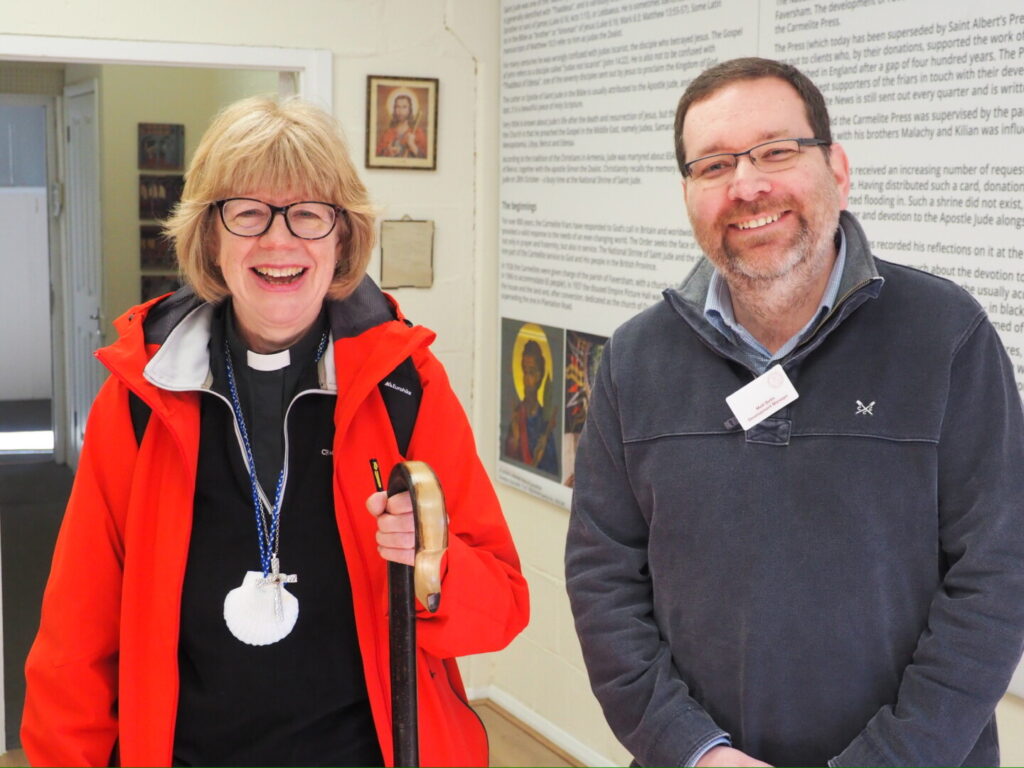
The ‘Society of Saint Theresa’ based in Croydon, Penge and other parts of south London were at the Shrine at the same time (on a separate pilgrimage) – and were overjoyed to meet the Archbishop.

After both visits, the Archbishop gifted a beautiful scallop shell – the traditional sign of a pilgrim.
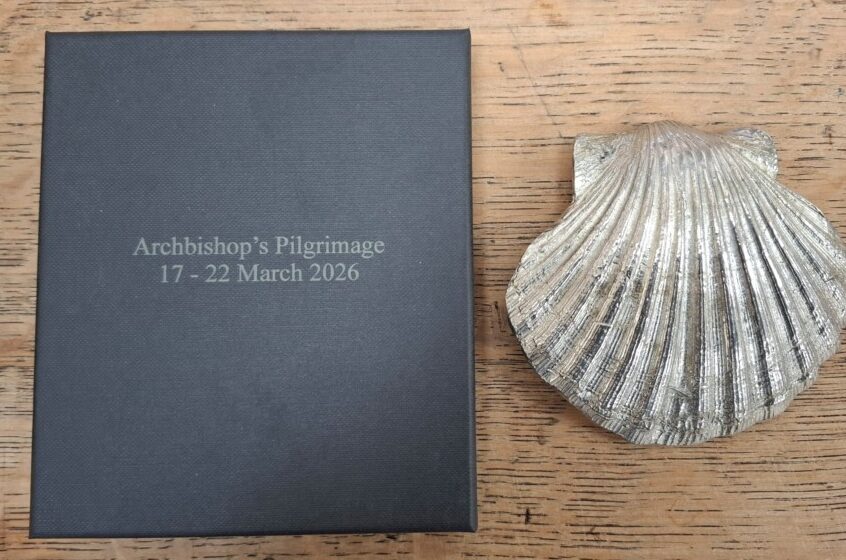
The scallop shell, is the symbol of baptism in Christianity. The baptismal font is often shaped like a scallop or decorated with one. The dish used by priests to pour water over the heads of those in baptism is often scallop-shaped.
The scallop, too, is the symbol for the Apostle James the Greater. St. James used the scallop shell during his pilgrimage to beg for food and water. Even the poorest people could fill the small shell, so he always found help along his way. Later, followers of St. James wore the scallop-shell symbol on their hats and clothes and it became the symbol of pilgrimage. This is still the case today. This symbol is now synonymous with the famous pilgrimage route in Northern Spain the Camino de Santiago. But the scallop shell has one more meaning, a metaphorical one. It is considered that its lines represent the different routes pilgrims take to arrive at the tomb of Saint James in Santiago de Compostela.
It is the first time in modern history that an Archbishop of Canterbury has undertaken a pilgrimage like this in the lead-up to an Installation. The Archbishop, along with her husband Eamonn, walked the 140km route along the Becket Camino from Saint Paul’s Cathedral to Canterbury Cathedral, reflecting on her life pilgrimage from Bishop of London to Archbishop of Canterbury.
Thanks to Mr. John Toryusen for all the photos taken, to Mr. Torin Brown who is our link to the Diocese and Cathedral, and to Mr. Matthew Betts for organising the two visits with Mr. Brown.
Who are the Carmelites?
Over the centuries many people have felt called to Carmel: some as friars, nuns, or sisters; others within the context of married family life, and others as single people either living alone or in small informal communities. There are many and varied expressions of Lay Carmel in Britain today, people who follow the Carmelite way in the ordinary circumstances of everyday life.
In 1926, the Carmelite friars returned to Britain, first to Faversham founding the Parish of Our Lady of Mount Carmel (followed by the Shrine of Saint Jude in 1955), and the re-founding of the medieval priory at Aylesford in 1949.
The Shrine at Aylesford is dedicated to Our Lady of the Assumption and Saint Simon Stock (a former medieval prior). The Shrine of Saint Jude was founded as a response to the needs of the post-war generation looking for hope and Jude is often seen as the Apostle of Hope. Both Aylesford and Faversham have inspired creative endeavours, and the work of artists such as Adam Kossowski and Philip Lindsey Clark add great beauty to both shrines. The chapels at Aylesford have been described as “prayers in stone”.
The Carmelites have for centuries been enthusiastic about pilgrimage – both Aylesford and Faversham have been important centres of pilgrimage since medieval times. It is therefore fitting that by the twenty first century, they both remain part of busy pilgrimage routes to Canterbury, Ramsgate and Winchester. Each enjoy important partnerships with the Augustine Camino, the Dioceses of Rochester, Canterbury and their cathedrals (as well as many others).
Finally, the Carmelites have been committed to ecumenism for many years. They have been a member of the ecumenical charity ‘Churches Visitor and Tourist Association’ (CVTA) since 2014, plus several friars and lay members have been members of ecumenical committees/commissions across the country. Two friars have also had the position of ecumenical Canon of Honour in the diocese of Rochester.
The Pilgrimage
A pilgrim’s passport has been specially produced for the journey, designed by pupils from Ospringe Church of England Primary School in Faversham. The group will also give out prayer cards featuring a prayer written by pupils from The Archbishop’s School in Canterbury.
Dame Sarah Mullally, incoming Archbishop of Canterbury, said: “As I prepare for my installation at Canterbury Cathedral, it feels deeply humbling to be following in the footsteps of those who have walked this ancient route. For centuries, faithful pilgrims have flocked to Canterbury, and I will be reflecting on this tradition as we make our way through the Kent countryside and its towns and cities. I’m looking forward to visiting local churches, cathedrals and holy sites along the route – and to meeting people, praying with them and hearing their stories. As I walk this path I will be praying for our Church and our world and asking God to bless those we meet. Every Christian life is a pilgrimage – a journey with God. As I begin this new chapter in my own life and ministry, I am grateful to be walking with God and with others.”
Torin Brown, the Pilgrim Officer at Canterbury Cathedral said: “Pilgrimage is a wonderful outward encounter with new places and people, but for me the inward journey of spiritual improvement is equally inevitable to such an endeavour, and so it is a great privilege and honour to have the opportunity to accompany Archbishop Sarah as she prepares for her new role with humility and grace, by walking a camino to Canterbury.”
Richard Braddy, Chaplain to the Archbishop of Canterbury said: “As people from around the wider Anglican Communion prepare to come to Canterbury for the Archbishop’s Installation, it will be a joy to approach this occasion on foot and rooted in prayer.”
NOTES
- Please contact Matt Betts for more information: developmentmanager@stjudeshrine.org.uk
- Further reading: https://www.archbishopofcanterbury.org/news/archbishop-canterbury-walk-140km-pilgrimage-canterbury; www.stjudeshrine.org.uk; https://www.thefriars.org.uk/; www.carmelite.org
- The National Shrine of Saint Jude at Faversham in Kent, England, is served by the Carmelite Friars. A major centre of pilgrimage and prayer, it attracts thousands of pilgrims every year, especially around the feast of St. Jude on 28th October.
- Aylesford (which means a “crossing place for all peoples”) is a small village in the English county of Kent, where in 1242 a group of hermits from Mount Carmel were given land to establish a community by a crusader returning from the Holy Land. Aylesford was bought by the Carmelite Order in 1949.
- Over the years, Carmelite friars and lay members have walked on pilgrimages: from Winchester to Canterbury and London to Canterbury – only next weekend, the Development Manager at the Shrine of Saint Jude will be following in the Archbishop’s footsteps (and thousands more) walking from Aylesford to Faversham. This enthusiasm for pilgrimage has seen the British Province organise several pilgrimages across Europe – to Lourdes, Rome, Fatima, and Lisieux as well as a walking pilgrimage along the famous Camino de Santiago in 2025 and later this year.
- The Carmelites are one of the most ancient religious orders of the Catholic Church, first arriving in Britain in 1242. The Order is engaged in many different forms of ministry, including work in parishes, retreat centres, prisons, ecumenical and interfaith projects, justice and peace promotion, publishing, counselling, teaching, and spiritual direction.
- Photos above taken by John Toryusen except Shell and Friars being interviewed were taken by Matt Betts.